


Technology & Product
BOLT-Tester

BOLT-Tester
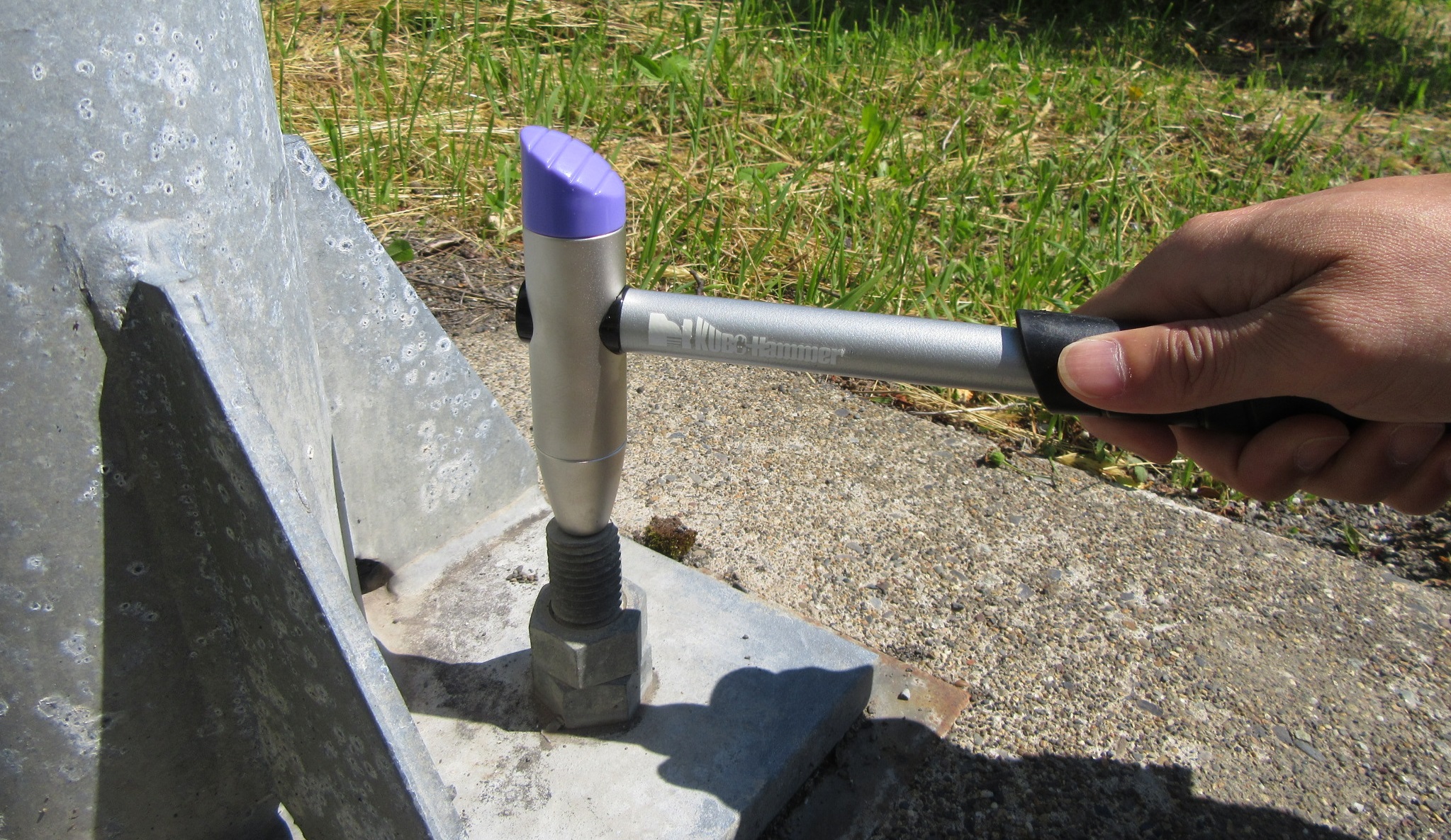
Non-destructive testing equipment for primary screening
The BT (BOLT-Tester) was developed in response to the 2012 accident in which a tunnel ceiling panel collapsed. Current anchor bolt maintenance methods involve visual inspection and hammering tests using an inspection hammer. These methods have problems, such as difficulty in visual inspection from a distance, accuracy variations due to the hammering test being dependent on the inspector’s subjective judgment, and the lack of recorded measurement data. While tensile tests are used for more detailed inspections, they also have problems, such as being time-consuming and expensive, and potentially damaging to the structure. The BT is a simple, non-destructive testing device that solves these problems. It evaluates the integrity of the bolts based on the time waveform of the reaction force generated during impact.

Applications
□ Soundness testing for post-installed anchor bolt
□ Detection of loose bolts in plants and steel bridges
□ Inspecting the integrity of wheel bolts on trucks, buses, etc.
□ Detecting loose nuts
Size of hammer
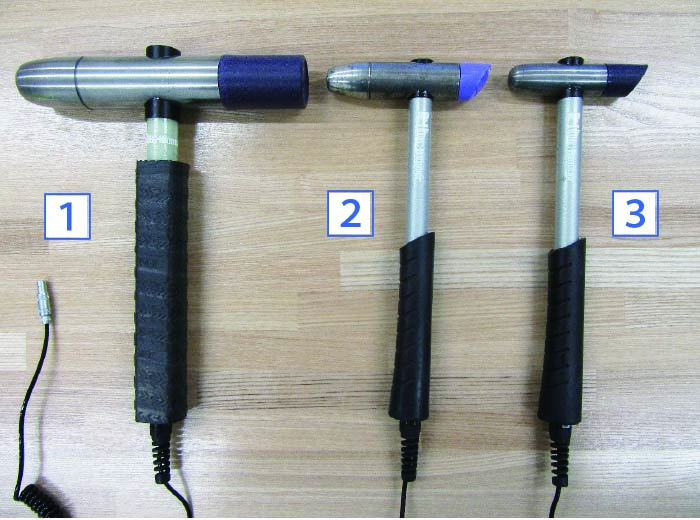
It is recommended to change the size of hammer according to the size of object to be measured.
| 1BOLT-Tester (Large) |
Weight:1400g Target size:M20 ~ M24 |
|---|---|
| 2BOLT-Tester (Standard) |
Weight:420g Target size:M12 ~ M20 |
| 3BOLT-Tester (Small) |
Weight:190g Target size:M8 ~ M12 |
Specification
| Model Name | BOLT-Tester | |
|---|---|---|
| Applicable Standard | NETIS (HK-180001-VE) JIS (Z 2339) | |
| Storage case dimensions | 390mm x 240mm x 130mm | |
| Device | 106mm x 40mm x 11mm | |
| Weight of Hammer | Standard Hammer | 420g |
| Waveform Measurement | Sampling clock: 0.5µs Measuring time: 2 ms |
|
| Power supply | Bus-powered (up to 350mA) |
|
| Connection to PC | USB connection with Windows PC | |
| Measurement data | Recorded as a text format | |
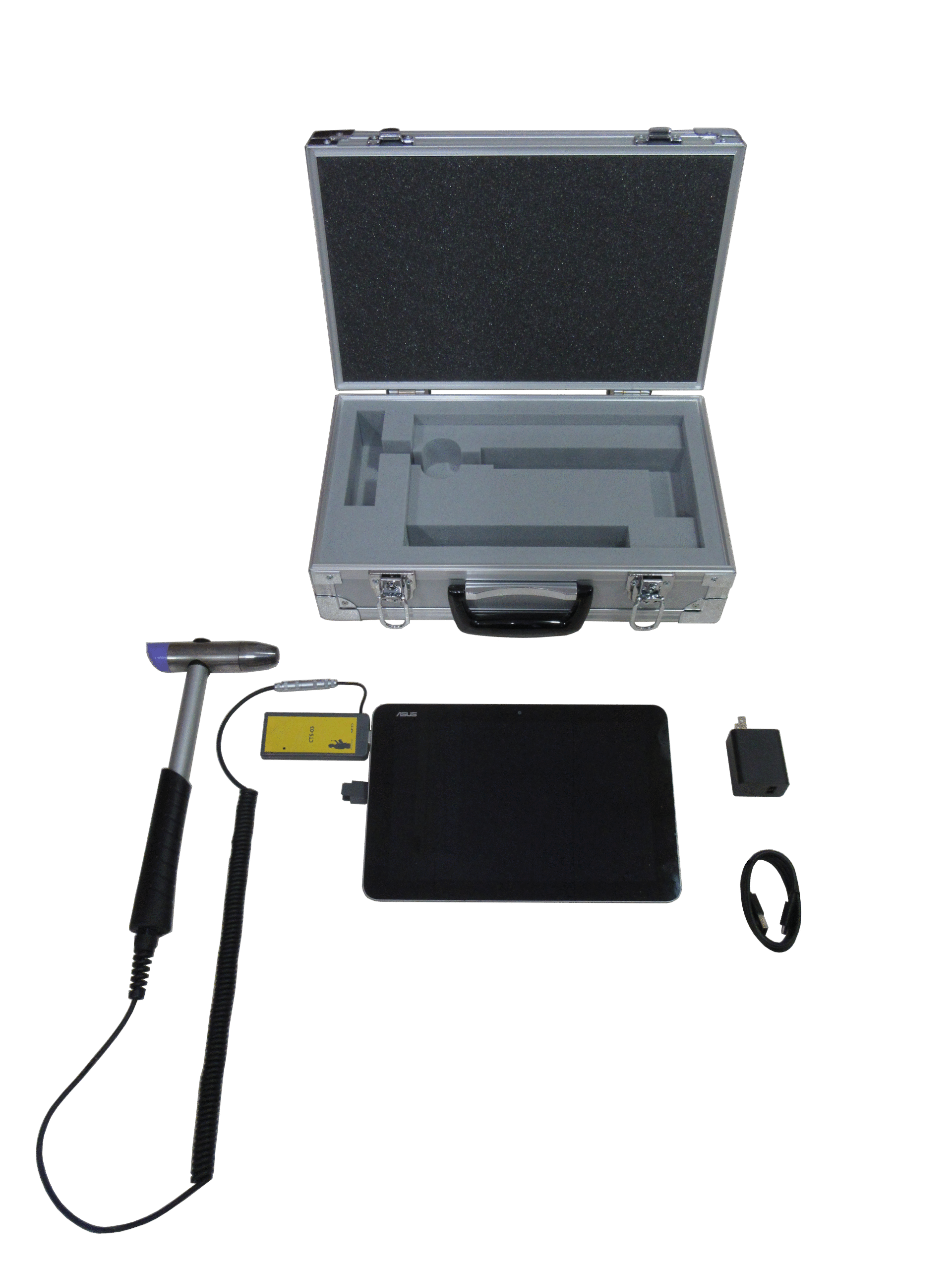
| Accessories | ・Storage case ・USB cable (A-A male-female, 1m) ・USB flash memory (device driver, application and instruction manual) |
|
| Option | Large hammer Small hammer |
1400g 190g |
How to use
Basic Principle
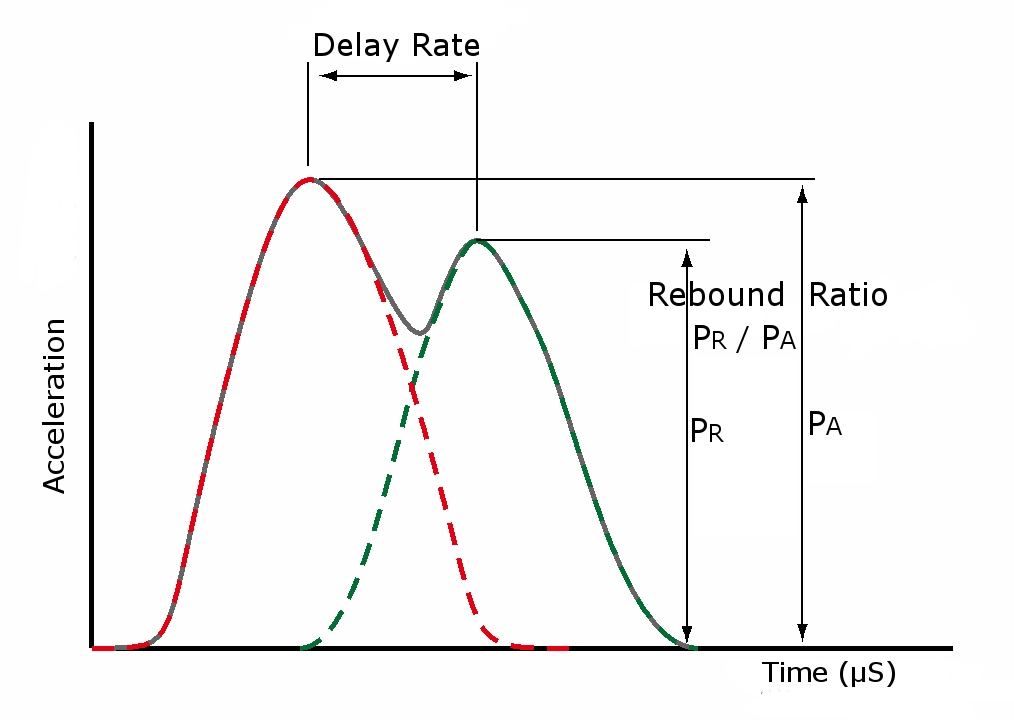
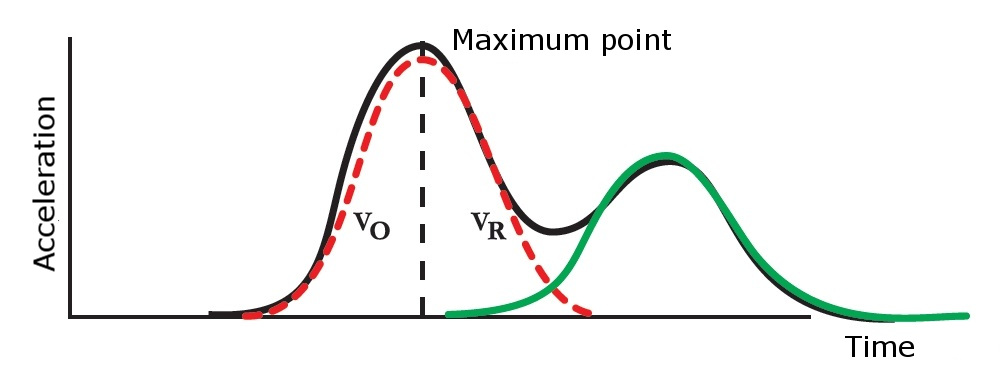
The BOLT-Tester strikes a bolt or nut with a hammer equipped with an accelerometer and measures the impact force waveform. The impact force waveform is separated into a penetration process (impact force) and a rebound process (reaction force), and the behavior of the struck object is examined based on the reaction force delay time and amplitude ratio. Elastic behavior (single-peak waveform) is determined to be sound, while plastic behavior (double-peak waveform) is determined to be unsound.*1
To test the soundness of bolts and nuts with the BOLT-Tester, the hammer’s mass must be greater than the bolt or nut being tested. Three types of hammers are available for BOLT-Tester (sold separately), each with their own range of application. (Patent No. 6186241, Bolt Soundness Diagnosis Method)
*1 Depending on the object being measured, it may not be possible to make a judgment. Be sure to check whether it is applicable to the site before use.
Example of the waveform
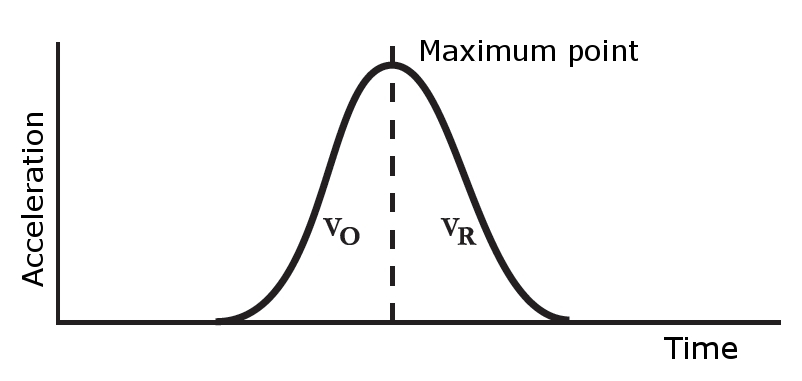
■ Waveform of stable anchor bolt
Measured waveform becomes most likely symmetry. Shape of the waveform becomes slightly disturbed depending on the condition of target bolt, number of peak is only one.
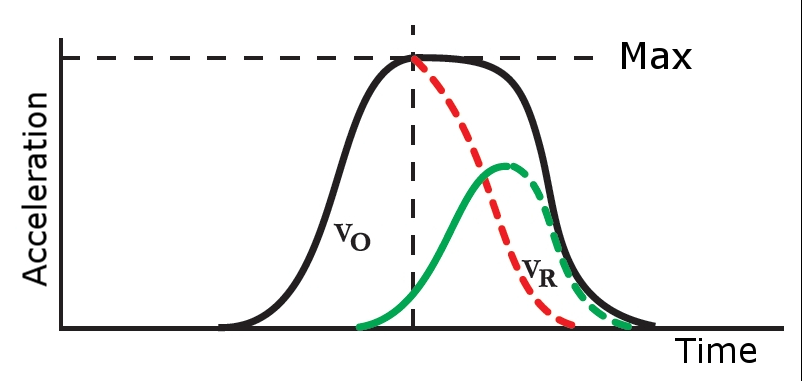
■ Waveform of a bit deformed anchor bolt
Peak of the waveform becomes wider as a response from the bolt is delayed.
■ Waveform of loose anchor bolt
Peak of the waveform becomes two due to the delay in a response from the bolt.
BT Use Cases
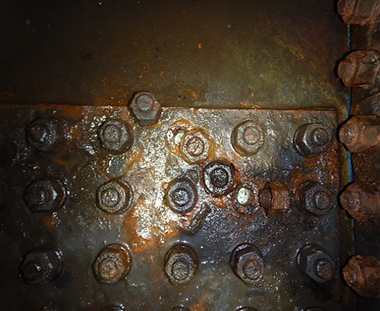
Steel bridge box girder splice F11T bolt inspection
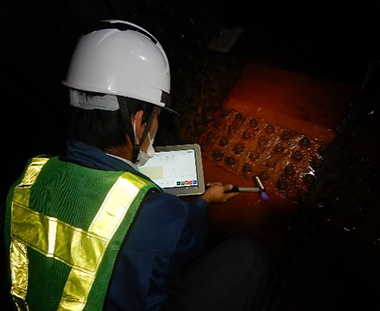
■Reason for the survey
An investigation was conducted at the splice joint of a steel bridge box girder where the F11T bolt had previously been confirmed to have fallen off, with the aim of checking for any abnormalities in the existing bolts and recording the data.
■Survey method
The side of the nut was struck three times with a standard size hammer (420 g) and the striking force waveform was measured.
■Survey results
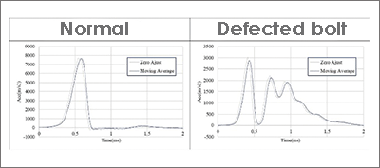
If the bolt was sound, the waveform on the left side (single peak)
was measured, and if there was an abnormality, the waveform on the right side (double peak) was measured.
The points where the double peak waveform was measured were judged to be normal by visual inspection and hammering test. After the BT measurement, a bolt break was discovered when the bolt was checked again.
■Responses and measures
Measurements using a bolt tester allow for objective data-based soundness evaluation. It
is also more accurate than visual inspections or hammering tests, reducing the chance of overlooking defects.
Measurement results can be checked immediately on-site, making it possible to take action on bolts that are deemed abnormal (such as tightening or checking for breakage).